Wednesday, June 15, 2022

The Benefits of A Professional Financing Partner


We just returned from the very successful Automate Conference in Detroit.  In speaking with many of the vendors at the show, I was surprised by how many leave the financing decision up to their customer, in other words, they don't proactively take control of the sale by bringing in an expert that is an advocate for them to accelerate sales cycle and close the deal.  There is a "real" need for vendors and sales representatives to own the financing process from the top of the sales cycle.  Below represent some of the main qualities and value points that we bring to the table:

  • A professional who understands all aspects of the financing and leasing process.
  • A professional who can simplify the process but is willing to explain the complexities when needed.
  • A professional who is fully available when needed to train, encourage, and support vendor sales professionals.
  • A professional who is capable of pre-qualifying transactions to save time and money for all parties.
  • A professional who is willing to think and act outside of the commodity box and offer unique services and products.

Contact me to discuss how our customer financing programs add significant value to help leverage and close more sales.  Dean Morrison, 954-224-3390, dmorrison@dimensionfunding.com

Monday, June 13, 2022

Top Trends Driving Technology Providers in 2022


The top trends driving technology providers in 2022


GUEST COLUMN BY RAJESH KANDASWAMY

SHAR

Technology’s impact on society and national economies continues to intensify, in turn increasing the business responsibilities of technology service providers and what their customers expect from them.

This deeper entrenchment in business has also made technology providers much more sensitive to factors beyond information technology. It’s no longer sufficient for them to address client needs and provide quality products. Rather, they have to be aware of the broader economic, social and technological forces that have come to form a large bearing on their business.

Such forces make up this year’s top trends for technology service providers, or TSPs for short (below).


Co-innovation ecosystems

Technology innovation is at the heart of every TSP. However, in the digital world — with much stronger interconnections among technology providers, customers, partners and governments — traditional siloed innovation practices such as research and development and basic product development will not be enough to survive.

Instead, a co-innovation ecosystem is an emerging approach that accelerates the development of solutions to industry problems, spreads risk and cost across the participants, and drives adoption of the end solution. It enables internal, external, collaborative and co-creative ideas to be converged and directly tied to value creation with the “shared revenue/value” among ecosystem stakeholders and participants.

Engagement, co-creation and compelling experiences for value creation are at the core of co-innovation. Product development and the value of co-innovative organizations are thus difficult to replicate by competitors.

In fact, by 2023, 30% of all revenue-bearing emerging technology solutions will be developed via co-innovation ecosystems, enabling vendors to become more competitive and expand into new markets.

Sustainable business

Sustainable business is a strategy that incorporates environmental, social and governance or ESG factors into decision-making. It is underpinned by sustainable technology, a framework of solutions that enable ESG outcomes.

Growing sustainability-driven product investments and deployments are taking place across numerous categories such as sustainable IT — for example, cloud sustainability or green software development — smart energy infrastructure and circular product innovation.

In the end, tech providers that can quantify their offering’s positive contribution to customers’ sustainability objectives will increase their win rate by 20% by 2025.

Talent agility

The post-pandemic pace of TSPs’ business can no longer be accommodated by rigid and fragmented talent management processes. This is where talent agility comes in – the ability to support talent needs for business agility through a combination of skills and talent supply analysis, and by connecting fragmented existing and new talent pools without borders.

Talent agility will affect six key areas of TSP business: products and services, customers and buyers, operations and processes, competitive landscape, and partners and ecosystems.

By 2025, 30% of TSPs will create a single talent network to connect up to six separate talent pools, up from fewer than 5% today.

 Techno-nationalism

Digital sovereignty laws and regulations are growing in scope and accelerating in most major markets, giving a short-term window for market expansion to solidify a presence for TSPs.

As competition across country borders and purview declines, and more restrictive digital usage laws expand, prices are expected to increase, creating revenue opportunities for those with scale and reach. Governments, too, will become increasingly aware of the value of citizen data.

By 2026, nationalistic and protectionist value-based economic systems will grow 10 times globally, disrupting more than 80% of all technology companies’ go-to-market and product strategies. Product leaders will need unique, digitally distinctive operating architectures that are compliant to social, legal and economic zones by region.

Democratization of technology

The democratization of technology empowers non-IT workers to select, implement, produce and custom fit their own technology. Product leaders must embrace the new opportunities this trend offers and meet the needs of a new set of citizen developers and business technologists, or struggle to deliver compelling solutions and experience eroding market positions.

After all, by 2024, 80% of technology products and services will be built by those who are not full-time technical professionals.

Intelligent applications

Intelligent applications use data and machine learning to generate a continuous learning system that provides adaptive and contextualized experiences. For example, emerging intelligent applications might generate new financial products and services based on customer data or create new customer experiences such as autonomous business operations in retail stores or automated workflows and fleets within mining.

Enterprise stakeholders intuitively embrace the principles and promises of intelligent applications, and will only continue to do so. In a recent Gartner end-user survey focused on emerging technology adoption, the mean investments in intelligent applications over the past 12 months was $408,000, and the mean value of planned investments in intelligent applications within 2022 is $618,000.

Distributed enterprise

Organizations are shifting toward “distributed enterprise” to support hybrid work, remote delivery and digital experience at all touch points. In this business model, there is growing demand for technology solutions and tools that can support a predominantly non-office workplace and accelerated digital transformation initiatives to support distributed delivery for clients.

Tech providers must respond to these shifts by prioritizing technologies and product capabilities that blend the digital and physical worlds. By 2023, 75% of organizations that exploit distributed enterprise benefits will realize revenue growth 25% faster than competitors.

Composable business

Composable business is a concept where leaders can quickly build new business capabilities by assembling digital assets in an organization that is architected for real-time adaptability and resilience in the face of uncertainty. It impacts all facets of tech providers’ business as it enables enterprises ability to respond to the market and seize digital opportunities faster and cheaper.

Seven percent of respondents in the 2022 Gartner CIO and Technology Executive Survey indicated that they have already invested in composable enterprise, but an additional 60% expect to have done so by the end of three years.

Composable business is certainly a market shift but does open up new markets for TSPs.

Beyond intellectual property

Historically, protecting and controlling ideas and inventions equaled advantage. IP strategies such as patents represented a powerful way of generating value and are the cornerstone of traditional high-tech strategies. But their role is changing.

“Beyond IP” recognizes the rise of alternative approaches for realizing value from ideas, inventions and other proprietary assets. Rather than creating proprietary IPs with finite boundaries to be defended, new leaders seek a pool of ideas and insight with fluid boundaries whose value increases through application that builds the next set of ideas.

IP and intellectual capital or IP/IC protection strategies based on “fixing ideas” into patents and so forth will reduce the value of the IP/IC by up to 50% over the next five years.

Unlimited capital

Unlimited capital is the trend in which there is such an abundance of capital competing for investment in private companies, that tech providers have access to virtually unlimited amounts of capital at a low cost. Startups that can successfully demonstrate product market fit can raise dramatically larger rounds of financing at earlier stages of development, allowing them to accelerate growth without regard to capital efficiency or risk.

Rajesh Kandaswamy (@rajeshakan) is a distinguished analyst vice president and fellow at Gartner Inc. who advises C-level executives and product leaders on the strategic impact of emerging technologies. He wrote this article for SiliconANGLE. Join Rajesh and his colleagues at the Tech Growth & Innovation Conference, taking place virtually July 12-13, 2022.

Friday, June 10, 2022

Benefits of Using Proactive Customer Financing at "Point of Sale"


Increase Your Business by Offering Point of Sale Financing

When it comes to manufacturing and reaching your customers, business-to-business sales tend to be a little different than business-to-consumer. Your product, whether it’s vehicles, equipment, or software, is essential for businesses to operate. However, manufacturers often run into a problem. Small businesses that need the product or equipment your business is manufacturing often cannot afford the entire upfront cost of your product or it would negatively impact their working capital. This barrier not only hurts the small business who could significantly use your business to expand their own, but it also creates a barrier to your sales and ability to reach all business owners in your market.

One solution to expanding your business-to-business sales is to offer financing at the point-of-sale for your clients. According to a Forrester Research Study, businesses that offer to finance can expect up to a 32% increase in their sales. Like any business, the one you own could surely benefit from a nearly one-third increase in your sales, right? The problem is, how can your business afford to offer credit or financing to your customers and let the product walk out the door without full payment? Third-party financing vendors can help you!

Benefits of Point of Sale Financing to Businesses

Your business owner customers love POS financing because they can get a quick decision due to expedited underwriting and an electronic application process. Many customers also see benefits through these financing methods compared to trying to secure a small business loan outside of your company through traditional lending.

How often do you have customers checking out your equipment, fleets, software, or other business products, just to leave empty-handed when they find out the cost of what they need? Many of these business owners plan to obtain a small business loan to make a large purchase; however, how often do they return? Offering customers the ability to immediately purchase the equipment, software, or technology they need to grow their business through POS financing is a surefire way to increase your sales and customer base.

Another benefit of capturing the sale through POS financing is the added opportunity to up-sell the business owner. When customers obtain financing from some third-party financing companies, they can turn the large upfront costs into a monthly payment. Manufacturers have the opportunity to offer the business owner a chance at better technology, the upgraded model they were eagerly eyeing, or adding on the bonus of automatic yearly or multi-year subscription software services to the sale. The Forester Study referenced early also showed that most of your business clientele would increase their order value by up to 75% when they qualify for POS financing.

Business owners also have the opportunity to secure funding without having to jump through the hoops of mountains of paperwork and applications, compiling information that lenders suggest, and dedicating the extra time to securing a loan. Through POS financing under $500,000, a business owner can often skip most of the paperwork in many cases and get approval with just a one-page financing application.

The ability to increase your average transaction dollar amount without reducing your margins substantially adds to the profitability of a manufacturing company or wholesaler.

Manufacturing companies often need a large amount of working capital in order to offer their customers in-house financing programs. However, there are third party financing vendors that your manufacturing or wholesale company can partner with to leverage these financing options at the point of sale.

Benefits of Using Third-Party Vendors for Financing

One of the most significant benefits of using a third-party vendor for your point-of-sale financing is the shortened time between the sale and collecting the total payment. When companies use third-party vendors for financing, there is usually no wait time between the sale agreement and payment in full. The business-owning customer is making their payments to the financing vendor who, in turn, fronts the payment to your business for the customer. The third-party vendor will make money from interest rates while you have peace of mind that you captured a more significant sale and a loyal customer through financing.

Another significant benefit of using third party financing vendors is the ability to approve customers for loans who may not qualify under traditional financing guidelines through banks or other lending institutions. Third-party vendors understand that not every business has working capital and cash flow that allows them to make large purchases. When business owners cannot qualify or get turned down by banks for traditional business loans, they usually think their options for financing are limited. Third-party vendors open up brand-new doors for your customers to expand or upgrade while also building their business credit and reputation.

Another difference between financing companies and a bank is that the bank usually requires a UCC on all of the business’ assets. Financing companies are generally unsecured because they only have the purchased equipment or software as collateral. Purchasers generally are not eager to have all of their business assets as security for a bank loan.

If your business is ready to take the plunge to finance business owners at the point of sale, and you want more information on how to make this possible through third-party vendors, contact Dean Morrison, 954-224-3390 or by email at dmorrison@dimensionfunding.com

Thursday, June 2, 2022

A fundamental shift in the way businesses view their technology


In this blog post from Erik Mcfrazier – CEO at Pacific IT Support, and one of my colleagues from BCPA and IAMCP - he very clearly connects the dots to make the case that businesses are spending on IT as an investment and not as a cost.  

Many businesses no longer see IT as a cost. They embrace it as an investment. They can see the direct correlation between creating robust, safe, and flexible systems – and their teams’ abilities to achieve more. Owners and managers are also placing more value on excellent, proactive technology …”  

Your ability to include creative and timely financing programs provides your clients with the ability to make these important investments in their business….I’m here to help you create messaging that will resonate with your clients and leverage more…and more profitable sales! Dean Morrison, 954-224-3390  


Businesses are spending more on IT this year

Posted by Pacific IT Support On April 29, 2022

By Erik Mcfrazier


As a business owner or manager, you know how important good IT is. Your business couldn’t function without it.  

Your IT isn’t just about computers and data. It’s everything from your phone system to your printers, to where you access your documents.

 And that’s without going into the measures you must take to keep your data and infrastructure safe and secure from cyber criminals. So, we weren’t surprised by a new forecast from IT research and consultancy firm, Gartner, which predicts businesses will spend more on technology this year.

 In fact, the global IT spend could reach an enormous $4.4 trillion. That’s despite rising inflation, the Russian invasion, and shortages in both chips and IT talent.  We believe there’s been a fundamental shift in the way businesses view their technology.  

  Two years ago, at the beginning of the pandemic, companies were forced to take unexpected urgent action to help employees work from home. In many cases that meant a large investment in devices, rapid changes to systems, and the adoption of new technology.

 And it’s worked out well for most. Businesses have adapted quickly, and many have embraced the changes on a more permanent basis. But it’s also made business leaders realize they need to be better prepared to respond to future potential disruption.

 This is the difference between a flexible and agile business… and one that stumbles at the first hurdle.

 Many businesses no longer see IT as a cost. They embrace it as an investment. They can see the direct correlation between creating robust, safe, and flexible systems – and their teams’ abilities to achieve more. Owners and managers are also placing more value on excellent, proactive technology support from a trusted partner.  

 To not only plan and execute big development projects. But also, to help reduce downtime and ensure systems are secure and running as they should be. If you’re reviewing your spend on technology and support, we can help. 

Thursday, May 26, 2022

Thoughts On The Culture of Nice


                    Important To Be Nice!

Published on October 8, 2019

Brigette Hyacinth

 For far too long, being nice has been mistaken for being weak. In reality, niceness is an necessary quality of leadership for the world we’re living in. It has become so rare that when someone does a kind act or goes out of their way to be nice to someone, it goes viral on social media. Being nice doesn't mean you can't make hard decisions or stand up to difficult people, it just means you are respectful, kind, and show empathy to your employees.

When kindness isn’t modeled in the workplace, we find ourselves in an environment that is, unhealthy and at worst, toxic. Today people are clamoring for a more human style of leadership. In an age of automation and AI, leaders hard skills are easily being replicated by smart technology. What will make the difference in effective leadership is soft skills.

Here are 7 ways I've found being nice can bring you more success as a leader at work. You can start to encourage a culture of being nice to others by carrying out random acts of kindness during your day.

1. Be considerate: Hold the door open for the person behind you. If you are going to the water cooler, ask someone close to you if they would like you to fetch water for them also.

2. Smile at a colleague. When you make eye contact and smile at someone you are showing that they matter which gives them a boost of happiness.

3. Mind your manners. Say "Good morning" or "Hello" to colleagues more often.

4. Show appreciation: Be more vocal in your praise. Acknowledge the contribution and efforts of others.

5. Listen more. Learn to listen with the intent to understand. Don't just dismiss or ridicule others' viewpoints. Listening shows that you care.

6. Offer support and help to team members who are struggling.

7. Treat everyone with the same level of respect, whether it be the janitor or the CEO.

Everyone you meet is fighting a battle you know nothing about. Be kind always.

The way you treat others shows your values and true character. You can't influence others if you aren't authentic. Employees are looking at you as a leader to determine if they can trust you.

In my experience, tough and nice doesn’t have to be incompatible. Managers, please use the human-to-human approach when dealing with employees. It’s people you are dealing with, not just a statistic on a graph. Get to know your people, meet them where they are, and be flexible. Employees want to be treated as human beings.

In the end, people make companies successful. Any strategy or business plan relies on motivated and engaged people to make it happen! It's just like a relationship. For a relationship to last, there must be mutual respect, love, trust, understanding and appreciation. Without these, the foundation is shaky. This is why the most successful companies focus on people and relationships, and make sure both are not just managed but lead and cared for.

Monday, May 23, 2022

Decisions of Fear Wrong For Making Investments According to Article


Stock Market Reaction Shows that Decisions of Fear
Are Wrong for Investments

Newly developed scientifically predictable investment model shows that the recent market volatility is a result of instinctive response to fear rather than analytical response to economic indicators. The instinctive-response mode  makes investors “cut and run.” Conversely, the analytical-response mode, a.k.a. system 2, originates in the cortex and makes analytical decisions based on the economy.

The scientifically predictable model shows that the U.S. economy is strong and vibrant. Retail sales climbed 0.9% in April after an upwardly revised gain of 1.4% in March. This is a key economic indicator because consumer consumption makes up about 70% of Gross Domestic Product (GDP). Additionally, the economy added 428,000 jobs in April, for an average monthly gain of 523,000 over the past three months. The unemployment rate, at 3.6%, is near pre-pandemic level.

The instinctive-financial behavior today is the same as the behavior of our ancestors who faced uncertainty of survival from the elements and predatory animals. Although our fears today are more financially oriented, our instinctive response still originates from this part of the brain but is not suitable for investment decisions. The scientific study on the impact of money anxiety on financial decisions has been peer reviewed and published in the Journal of Applied Business and Economics.

When investors are exposed to negative news, economic, political or social, their level of money anxiety increases, which automatically generates instinctive response as part of their survival mechanism. Unfortunately, the instinctive response means “cut and run,” so they sell their stock and get out of the market. The same response our ancestors had when they saw lighting in the sky – they grabbed their food and wood and run into the cave.

The Scientifically Predictable Investing Model was designed to neutralize instinctive decisions by promoting the science of financial decisions. The model provides investors with a scientific projection of the featured equities, suggesting that investors follow the scientific projection rather than their instinctive response to sell when panicking. The Scientifically Predictable Investment Model provides peace of mind during volatile markets such as the one experienced in the last two weeks.

About Analyticom LLC
Analyticom LLC is a behavioral economics and finance firm focusing on developing predictive models for financial behavior. The company is a pioneer in developing a scientifically predictable model for the equity market based on the level of money anxiety. The Scientifically Predictable model projects the rate and return of ETF based on a predictor that is featured in the study “Dynamics of Yield Gravity and the Money Anxiety Index” and has been peer reviewed and published in the Journal of Applied Business and Economics.
Contact:

Dr. Dan Geller
Behavioral Economist
for Financial Services
Analyticom LLC
drgeller@analyticom.com
www.analyticom.com
415-891-3093

Friday, May 20, 2022

Customer Financing Programs Are An Important Sales Tool As Pricing Of Products and Services Increase


Implementation of proactive customer financing strategies have become more important in this current inflationary business environment.  Call to discuss how Dimension can be helpful as an important tool to help offset customer pain points resulting from pricing increases in your products and services.  Dean Morrison, dmorrison@dimensionfunding.com (954) 224-3390


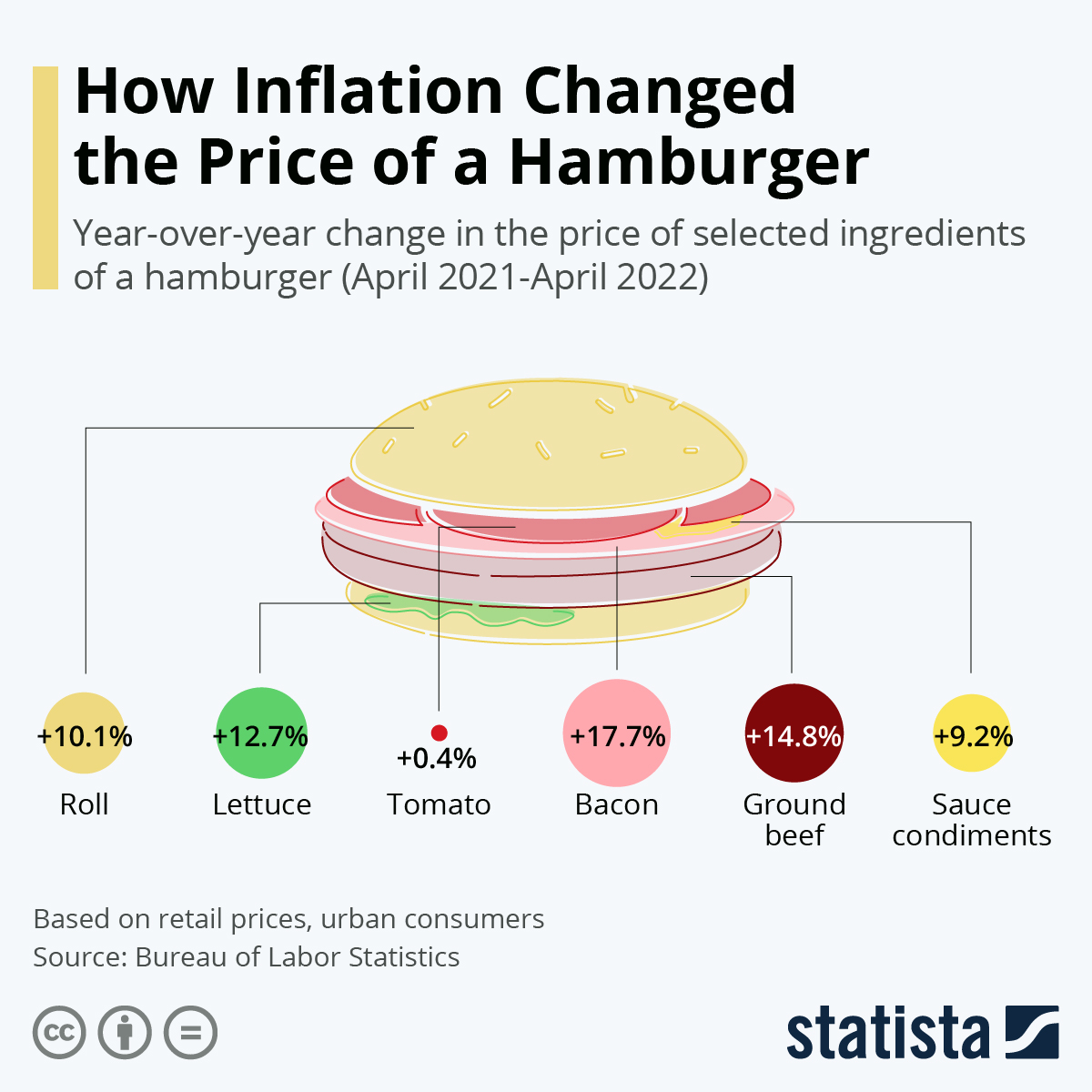
With inflation standing at 8.3% year-over-year in April, everyday items are becoming pricier for U.S. consumers. Food prices in particular took some significant steps up, as seen in the example of shopping for hamburger ingredients.

Meats experienced some of the highest price increases among food items: Ground beef now costs almost 15 percent more than in April 2021 and bacon is 17.7 percent more expensive than one year ago. On the other hand, the price of tomatoes was up just 0.4 percent over the course of one year, showing that some item suffered less inflation than others. At a 6.2 percent price increase, fresh vegetables as a whole saw the lowest rate of inflation of any food category.

Energy – the most volatile item in the Consumer Price Index together with foods - drove overall price increases even more. In short supply following the Russian invasion of Ukraine and ensuing sanctions, energy costs rose by 30.3 percent since April 2021. This increase is independent of the base effect as energy prices had already reached pre-pandemic levels again one year ago.

Inflation had already started to rise in 2021 in the aftermath of COVID-19 lockdowns that continue to affect global supply chains. It was further pushed up by the Russian invasion of Ukraine that saw energy supply disrupted by sanctions and Ukrainian products missing from world markets. As a result, inflation is reaching an increasingly broad range of products. For example, while the price of used cars and trucks had already skyrocketed in 2021, new vehicles have now also become 13 percent more expensive than they had been a year ago.

Given the high price of gas and cars, inflation is indirectly encouraging another sustainable behavior - using public transportation. The category became 2.7 percent more expensive over the past year – a way smaller increase than most other spending categories.

By Katharina Buchholz, Statista

Friday, May 13, 2022


Economic Pressures Likely Will Be Catalyst for Even More Tech Adoption

As this recent article from Isha Marathe of LAW.com suggests Even as the pandemic transformed the way legal operates, it didn't do enough to create a proactive shift toward tech use for many legal departments. Now, with prices rising and budgetary constraints, some expect increased automation even among the more stubborn firms. 

Are you offering your clients convenient and affordable financing alternatives to acquire your products and services? Contact Dean Morrison today to discuss how proactive financing programs can be easily embedded into your sales process and strategy.

Dean Morrison e. dmorrison@dimensionfunding.com  p. 954-224-3390

An economy facing historic upward price pressures might just be the impetus the legal industry needs to move towards even more tech adoption.

To be sure, the COVID-19 pandemic already has pushed the industry to become more tech-savvy. Still, even as legal tech saw the highest growth recently, vendors and legal ops professionals at the Corporate Legal Operations Consortium (CLOC) Conference 2022, said the one goal even the best solution has been unable to accomplish is educating in-house attorneys and general counsel to adopt new tools before they become vital.

Mary O’Carroll, chief community officer at Ironclad and former director of legal operations, technology, and strategy at Google, has seen the world of tech adoption from both sides and believes the legal industry is at its most open-minded when under pressure.

“Change is happening so fast in this industry that is still really tradition-based, so lawyers are still trained the same way at law schools, they are still trained up the same way at law firms. But the expectations around how legal services are delivered and the skill-set you need to be successful are very different now than they were 10 years ago,” O’Carroll said. “So how do we prep general counsel for being open-minded in leveraging technology? How do we prep them to challenge the status quo in how they have always hired someone in legal operations? There is a lot of education [GCs] need to move away from the ‘it’s not broken, we don’t need to fix it,’ [attitude], but legal ops and legal tech thrive when we are in times of economic pressure.”

As evidence, O’Carroll pointed out that legal ops first took off in 2008 in the depths of the Great Recession, creating demand for innovative cost-cutters all around. Now, as the U.S. faces its highest inflation in decades, general counsel are once again going to have to push themselves out of their solution box, which largely consists of spending and hiring.

“Once they have these constraints, [GCs] start thinking, how can I find the legal ops person who will make magic happen? Who can think about leveraging technology so that I can replace four [full-time equivalents] of lawyers with a new tool? Let’s get legal out of the way and automate some stuff,” she said.

Of course, even with new tools meant to automate legal processes pouring into the market, the actual degree of tech adoption even within legal ops remains an elusive metric, said Keesal Propulsion Labs (KP Labs) director of the digital transformation strategy Jeff Marple.

“I don’t think the pandemic has played a big enough role as everyone wants to say it has in tech transformation [of legal ops],” Marple said. “Yes, it’s made people a bit more tech-friendly. Video conferencing and collaboration has accelerated. I wish it was a better story. But how would I even measure it, to begin with? I can say there’s a lot more to automate out there. A lot of things don’t have to be done in the way they are, and I think there’s room for a digital transformation. That’s why I’m in the business I’m in.”

Some legal technology providers share O’Carroll’s view that a serious lack of training and education around technology is to blame for slow adoption within legal departments. But with increasing costs, tech may become a natural solution, pointed out Evisort founder and CEO Jerry Ting.

“Before the pandemic, legal departments [and firms] looked at contract management tools and said, ‘Wow that’s cool, we probably should have done that 20 years ago,’ Ting said. “I think now, it’s becoming less excusable when they don’t have the tool already. It’s a selling point to their clients. But a lack of knowledge holds them back.”

However, that’s not to say there won’t be progress. In the coming years, Ting forecasted “70% or more mundane legal tasks automated” because the cost of manual processes will outweigh the risk-averse nature of many in the legal sector, from firms to in-house attorneys.


Wednesday, May 11, 2022

Working 9 to 5?


After having had a taste of remote working through the pandemic, employees are now yearning for even greater flexibility when it comes to their working hours. According to a report by Adobe, 51 percent of enterprise employees would like to have complete flexibility when it comes to their schedule, in contrast to only 16 percent of respondents who said their ideal work week would have no flexibility at all, but rather “start and end work according to a set work schedule.”

Younger generations in particular appear to care about levels of self-autonomy over their work schedule, with 73 percent of Millennials saying that they would switch jobs to another with greater flexibility if their salary and job description stayed the same, according to the report. At the same time, as Wrike writes, an increase in flexible work schedules may also help gender equality, as parents can share the burden of child care. This trend appears to be gaining steam, as we’ve seen more companies taking up the idea, and even governments, as Ireland now gets set to implement the right to request flexible work arrangements, according to RTÉ.

Times have changed since Henry Ford introduced 8 hour shifts for factory workers, back in the early 1900s. As Forbes writes, living in a service economy is not the same as a manufacturing economy; we now have the technology to connect us with colleagues in different time zones instantaneously, and for many people, at least in the global north, social patterns have completely changed. As Adobe writes, “Employers need to address these challenges, or risk losing top talent.”

By Anna Fleck, Statista


Thursday, May 5, 2022

Interest Rate Increase Announced


WASHINGTON — The Federal Reserve on Wednesday raised its benchmark interest rate by half a percentage point, the most aggressive step yet in its fight against a 40-year high in inflation.

“Inflation is much too high and we understand the hardship it is causing. We’re moving expeditiously to bring it back down,” Fed Chairman Jerome Powell said during a news conference, which he opened with an unusual direct address to “the American people.” He noted the burden of inflation on lower-income people, saying, “we’re strongly committed to restoring price stability.”

The federal funds rate sets how much banks charge each other for short-term lending, but also is tied to a variety of adjustable-rate consumer debt.

Along with the move higher in rates, the central bank indicated it will begin reducing asset holdings on its $9 trillion balance sheet. The Fed had been buying bonds to keep interest rates low and money flowing through the economy during the pandemic, but the surge in prices has forced a dramatic rethink in monetary policy.

Markets were prepared for both moves but nonetheless have been volatile throughout the year. Investors have relied on the Fed as an active partner in making sure markets function well, but the inflation surge has necessitated tightening.


Monday, April 25, 2022

                         Marijuana to Add Approximately $99 Billion to American Economy This Year

Despite being prohibited by federal law, cannabis has quickly become one of the most lucrative industries in the country. After only a few short years of legalization, the state-legal marijuana industry has generated billions of dollars in sales and filled state coffers with billions of dollars in cannabis sales taxes.

Furthermore, the industry has created more than 300,000 new job opportunities across the country. Cannabis was one of the few industries considered essential at the start of the coronavirus pandemic, and it managed to consistently break sales records while other sectors struggled to keep their doors open.

Additionally, cannabis production typically involves a variety of cross-sector activities such as agriculture, manufacturing, retail, and even hospitality and events. These are all sectors that tend to be high value and have a greater impact on the economy. Rather than just estimating the amount of tax dollars cannabis would pump into the economy, this analysis looked at how the industry would impact the broader economy.

With lawmakers considering federal legalization, cannabis may prove to be even more lucrative in the future. According to an analysis from the MJBiz Factbook, marijuana sales are poised to add a whopping $99 billion to the U.S. economy this year. By 2026, the impact of cannabis sales on the American economy will be greater than $155 billion.

Published by the MJBizDaily, the data shows that cannabis could have a significant positive impact on the economy, especially if federal limitations are removed. Researchers from MJBizDaily studied industries that have similarities to the marijuana sector, deliberated with economists, and multiplied projected medical and recreational cannabis retail sales by a standard multiplier of 2.8 to measure marijuana’s projected impact on the economy.

Dimension Funding provides Cannabis Market vendors with customer financing programs that can help them leverage more deals, call Dean Morrison at 954-224-3390 for more information and all details. 


Source: cannabisnewswire.com

Wednesday, April 6, 2022

 Positive Employment Situation Boosts Business and Consumer Financial Confidence in March


The March Money Anxiety Index decreased 2.1 index points from last month to 48.1 and down 38.1 points since the index peaked in the beginning of the pandemic in April of 2020. The decrease in the Money Anxiety Index reflects higher financial confidence stemming from a robust employment market that rose by 431,000 jobs in March.

The Money Anxiety Index is the only financial confidence index that measures actual financial behavior of consumers rather than how they respond to surveys. Since what people say is not always what they actually do with their money, the Money Anxiety Index is the only way to objectively and accurately measure consumers’ financial confidence.

Survey-based financial confidence indices, such as the University of Michigan Consumer Sentiment Index, are based on how people respond to their survey, which is very subjective. If the survey is filled out on a “bad-news day,” it is very likely that the response will be bleak and negative and vice versa. Thus, survey-based indices have a response bias and they do not reflect actual financial confidence.

The Money Anxiety Index is a scientific predictor of financial behavior. It is peer reviewed and published in the Journal of Applied Business and Economics. The index is highly reliable because it measures the level of financial anxiety of people based on what they actually do with their money rather than how they respond to consumer confidence surveys.